
San Francisco · Generator Installation & Repair
Industrial Generators
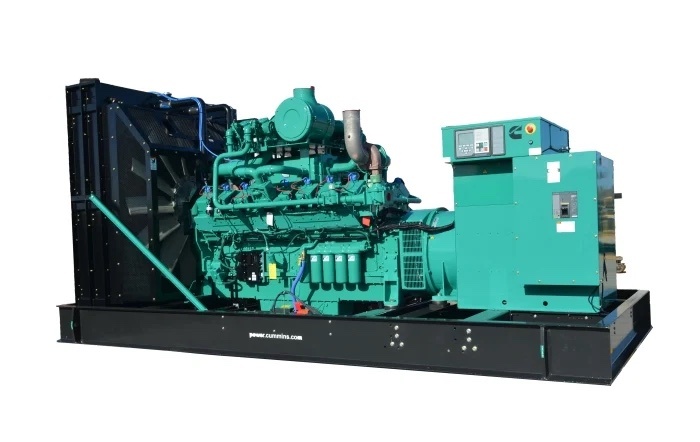
Diesel and gas sets from 150kW to over a megawatt for manufacturing, cold storage, research and process loads that cannot be interrupted.
Industrial Generators · San Francisco
Power For Loads That Cannot Be Interrupted
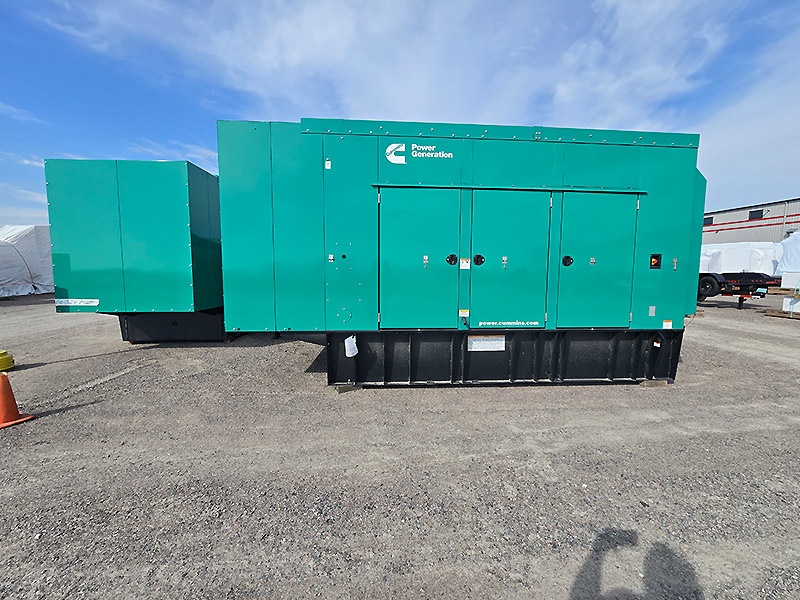
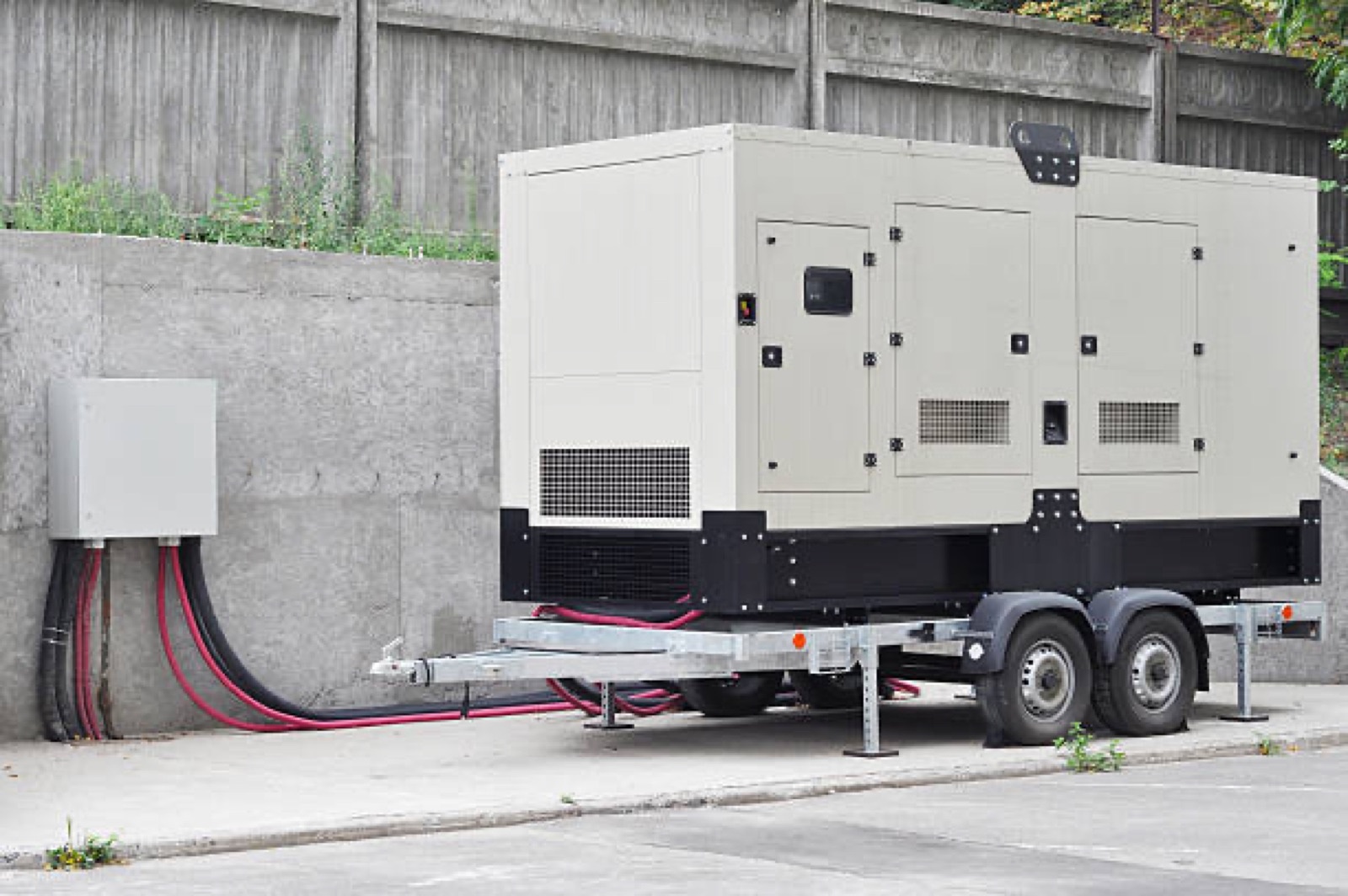
Industrial generators are a different discipline from residential standby, and pretending otherwise is how projects go wrong. At 150kW and above you are dealing with fuel systems, emissions permitting, seismic anchorage, paralleling switchgear on some sites, sound attenuation to meet a city ordinance, and a load profile that has to be proved under test rather than assumed from a nameplate. We install, commission, service and load-bank test diesel generators and gas generators in that class across the Bay Area: cold storage in South San Francisco and Oakland, process and manufacturing loads through the East Bay industrial belt, life-safety and research loads in the biotech corridor, and standby for water, waste and telecommunications infrastructure. Sets go in as skid-mounted units in a yard or on a roof, in weatherproof sound-attenuated enclosures, or on trailers where the site needs the option of moving them. For shorter-term needs at this scale, industrial generator rental is usually the better commercial decision, and for buildings in the 40kW to 150kW band a commercial generator is the right size of answer.
Why Go With Us On Industrial Work
The thing that separates industrial generator contractors is not whether they can set a machine. It is whether the paperwork, the testing and the service afterward are real. A diesel set on a permitted site carries air-district registration and hour logging. A life-safety set carries mandated testing at defined intervals. A set backing a research freezer farm or a process line needs proving under actual load, which a monthly no-load run does not do and a load bank does. We do the load-bank testing, we keep the logs, we handle the air-district paperwork for customers who want it handled, and our service reports say what we found rather than that everything was fine. We are also willing to tell a facilities manager that the existing set is adequate and does not need replacing, which happens more often than the industry likes to admit — the far more common real problem is a correctly sized machine that nobody has maintained.
- Diesel and natural gas sets from 150kW to over 1MW, skid, enclosed, roof-mounted or trailer-mounted.
- Resistive load-bank testing to prove real capacity, not a no-load run that proves the engine turns over.
- Air-district permitting and hour logging handled for sites that carry fuel-burning equipment.
- Seismic anchorage and vibration isolation engineered rather than improvised, because this is Northern California.
- Scheduled service contracts with fuel polishing, coolant analysis and written reports that record findings.
- 24/7 emergency generator service, because an industrial set failing is not a next-business-day problem.
Reasons To Install An Industrial Generator
At this scale the driver is almost always a specific consequence of losing power, not general prudence:
Product or research is destroyed by an outage
Minus-eighty freezers, incubators, cold rooms, fermentation, plating lines and anything with a controlled temperature or atmosphere. The value of a single freezer’s contents in the South San Francisco biotech corridor routinely exceeds the entire cost of the generator that would have protected it.
Code requires standby power for life safety
Emergency lighting, exit signage, fire pumps, smoke control, elevator recall and alarm systems in buildings above a certain size carry mandated standby power with mandated testing intervals. This is not a purchasing decision, it is a compliance obligation, and inspectors check the logs.
A process cannot be restarted cheaply
Some production lines take hours to bring back and scrap everything in progress when they stop. If the cost of an unplanned restart runs into five figures, the arithmetic on standby power resolves itself after one event.
The utility service itself is the constraint
Where a site needs more capacity than the available service and the upgrade is years out, a permanent generator running in parallel or on peak-shaving duty is sometimes the only way to get the plant operating on the schedule the business needs.
Contracts or insurers require it
Cold-chain logistics contracts, data and telecoms service agreements, pharmaceutical storage and some insurance policies specify standby power and evidence that it is tested. The evidence part is where most sites are actually weak.
The existing set is past its working life
Sets from the eighties and nineties are still running all over the East Bay, and many are fine. The ones that are not tend to announce it through failed load-bank tests, coolant analysis, injector problems and parts that are no longer manufactured. Replacing on that evidence is very different from replacing on age alone.
Send us the single-line diagram, the load schedule or just the nameplate of what is out there now, and we will tell you what the site genuinely needs. Call: (415) 818-1837
How An Industrial Project Runs
Longer lead times, more agencies, and a commissioning process that produces documentation.
1. Survey and load study
We measure the real load rather than adding up nameplates, look at starting kVA on the largest motors, review the switchgear and the existing service, and check what the site is obliged to back up by code. That produces a specification and a written budget number, not a guess.
2. Permits, emissions and structure
Electrical, mechanical and building permits, air-district registration or permit for fuel-burning equipment, structural and seismic sign-off for the anchorage, and noise assessment where a local ordinance applies. This phase is where industrial projects actually take their time.
3. Delivery, set and connection
Crane or forklift set onto the pad, base or roof steel, seismic anchors, vibration isolation, fuel system and day tank, exhaust and silencer, conductors into the switchgear or transfer equipment, controls and remote monitoring. Rigging on constrained urban sites is planned in advance rather than discovered.
4. Load bank, commissioning and handover
Resistive load-bank test at rated capacity, transfer testing including a full outage simulation, alarm and remote-monitoring verification, and a documented commissioning report with the readings in it. Then the service schedule starts, because the first year is when problems show.
Fuel, Emissions, Testing And Enclosures
The technical decisions that shape an industrial installation:
Diesel or natural gas at industrial scale
Diesel generators dominate this class: higher power density, better step-load acceptance, and fuel on site that does not depend on a utility that may be affected by the same event. Gas generators avoid fuel storage and the tank rules entirely, run cleaner, and suit sites where the gas main is dependable and the load steps are gentle. Bi-fuel sets exist and are worth considering where runtime requirements are long.
Air-district permitting on fuel-burning sets
Stationary engines in this region are registered or permitted through the Bay Area Air Quality Management District, with limits on annual operating hours and requirements around emissions tier and record-keeping. Standby-only sets sit under different limits from prime-power ones. We handle registration, hour logging and the annual reporting for the customers who would rather it was somebody’s job than nobody’s.
Fuel storage, polishing and day tanks
Diesel degrades. Water gets in, microbial growth follows, and a tank that has sat for three years will happily plug a set of filters twenty minutes into the outage it was bought for. Sub-base tanks, day tanks with transfer pumps, annual fuel testing and polishing on a schedule are the difference between fuel on site and usable fuel on site.
Load-bank testing and why no-load runs mislead
A monthly exercise at no load proves the engine starts. It does not prove the set will hold rated output, and on diesel engines light-load running actively causes wet stacking, glazing and carbon build-up. A resistive load bank puts the machine at rated capacity for a defined period and produces numbers. Any set on a life-safety or high-value load should see one annually.
Sound attenuation and city noise limits
An unenclosed industrial diesel set is genuinely loud. Level 1 and Level 2 sound-attenuated enclosures, critical-grade silencers and acoustic louvres bring it down to something a mixed-use neighborhood will tolerate, and in San Francisco, Berkeley and Oakland the local noise ordinance decides how far you have to go. It is much cheaper to specify this correctly than to retrofit it after a complaint.
Seismic anchorage and vibration isolation
This is earthquake country and a several-tonne machine on a roof or a mezzanine needs engineered anchorage with calculations behind it, plus spring or pad isolation so the building does not transmit the vibration everywhere. It gets structural review as part of the permit, and it is one of the places where cutting corners is genuinely dangerous.
Paralleling, peak shaving and multiple sets
Larger sites frequently run two or more sets in parallel for redundancy or to build capacity in stages, with paralleling switchgear managing synchronization and load sharing. It also opens the door to peak shaving, where the plant runs on generation during expensive demand periods. Both are worth modelling properly before committing, because the switchgear is a serious share of the cost.
Rental as a bridge
Between a failed set and a replacement, or during a switchgear upgrade, a trailer-mounted industrial generator rental keeps the site running. We size, deliver, cable in and remove it, and on planned outage work we prefer to have the rental on site and tested the day before rather than the morning of.
What Industrial Generators Cost
Projects in this class run from the high five figures into the hundreds of thousands installed, and the equipment is often less than half of it. The drivers:
- Capacity. 150kW, 500kW and 1MW are three different worlds of engine, alternator, switchgear and rigging.
- Fuel system. A sub-base tank is comparatively simple; a bulk tank with transfer pumps, containment and monitoring is a project in itself.
- Switchgear. A single automatic transfer switch is one price; paralleling gear with load-sharing controls for multiple sets is another entirely.
- Enclosure and acoustics. Weather protection is baseline; Level 2 sound attenuation and critical-grade silencers to meet an urban noise limit add real cost.
- Structure and rigging. Roof and mezzanine installs need engineered anchorage, structural review and sometimes a street closure for the crane.
- Permitting and emissions. Air-district permitting, structural review and inspection all carry fees and, more importantly, schedule.
We quote equipment, installation, switchgear, fuel system and commissioning as separate lines so the decisions are visible, and we will tell you when servicing the existing set is a better use of the budget than replacing it. For shorter needs, price it against generator rental first, and see the rest of what we cover across the wider bay area.
Frequently Asked Questions
What size industrial generator does my facility need?
It comes from a measured load study, not a nameplate total. We record actual demand over a representative period, check the starting kVA of the largest motors, add whatever code obliges you to back up, and allow headroom for growth. Adding nameplates typically oversizes a set by a wide margin, and an oversized diesel running lightly loaded wet-stacks and fails early, so oversizing is not a safe error.
Diesel or natural gas for an industrial application?
Diesel for most: higher power density, better step-load acceptance and fuel that is already on site rather than dependent on a utility that may be affected by the same event. Natural gas where the load steps are gentle, the main is dependable and you would rather have no fuel storage, no tank regulations and cleaner emissions. Bi-fuel is worth pricing where the required runtime is long.
What is load-bank testing and how often is it needed?
A load bank applies a real, controlled electrical load so the set runs at rated capacity and you find out whether it holds. Annually is the standard for anything on a life-safety or high-value load, and it is also what clears the carbon build-up that light-load running causes on diesels. A monthly no-load exercise run proves the engine starts and almost nothing else.
Do I need an air permit for a diesel generator in the Bay Area?
Almost certainly, yes. Stationary engines are registered or permitted through the Bay Area Air Quality Management District, with conditions on emissions tier, annual operating hours and record keeping, and standby-only sets sit under different limits from prime-power ones. We handle registration, hour logs and annual reporting for customers who want that off their desk.
Can you rent an industrial generator while ours is repaired?
Yes, and it is the normal way to handle a failed set, a switchgear upgrade or a planned shutdown. We size the rental to the load, deliver a trailer-mounted set, cable it into your gear, test it and take it away afterward. On planned work we like it on site and proven the day before rather than the morning of.
How often does an industrial generator need servicing?
Diesel sets on standby duty want a minor service twice a year and a major service annually, plus an annual load-bank test. Sets that run more hours move onto an interval based on hours rather than the calendar. Fuel testing and polishing belong on the same schedule, because degraded fuel is the most common cause of a set failing when it is finally called on.
Need a generator in San Francisco?
Tell us the address and what has to stay running, and we will come back the same day with a free estimate and one fixed price.
Or call us now: (415) 818-1837