
San Francisco · Generator Installation & Repair
Whole House Generators
Permanently installed natural gas standby units that carry the whole panel, start themselves within seconds of an outage and shut down when utility power returns.
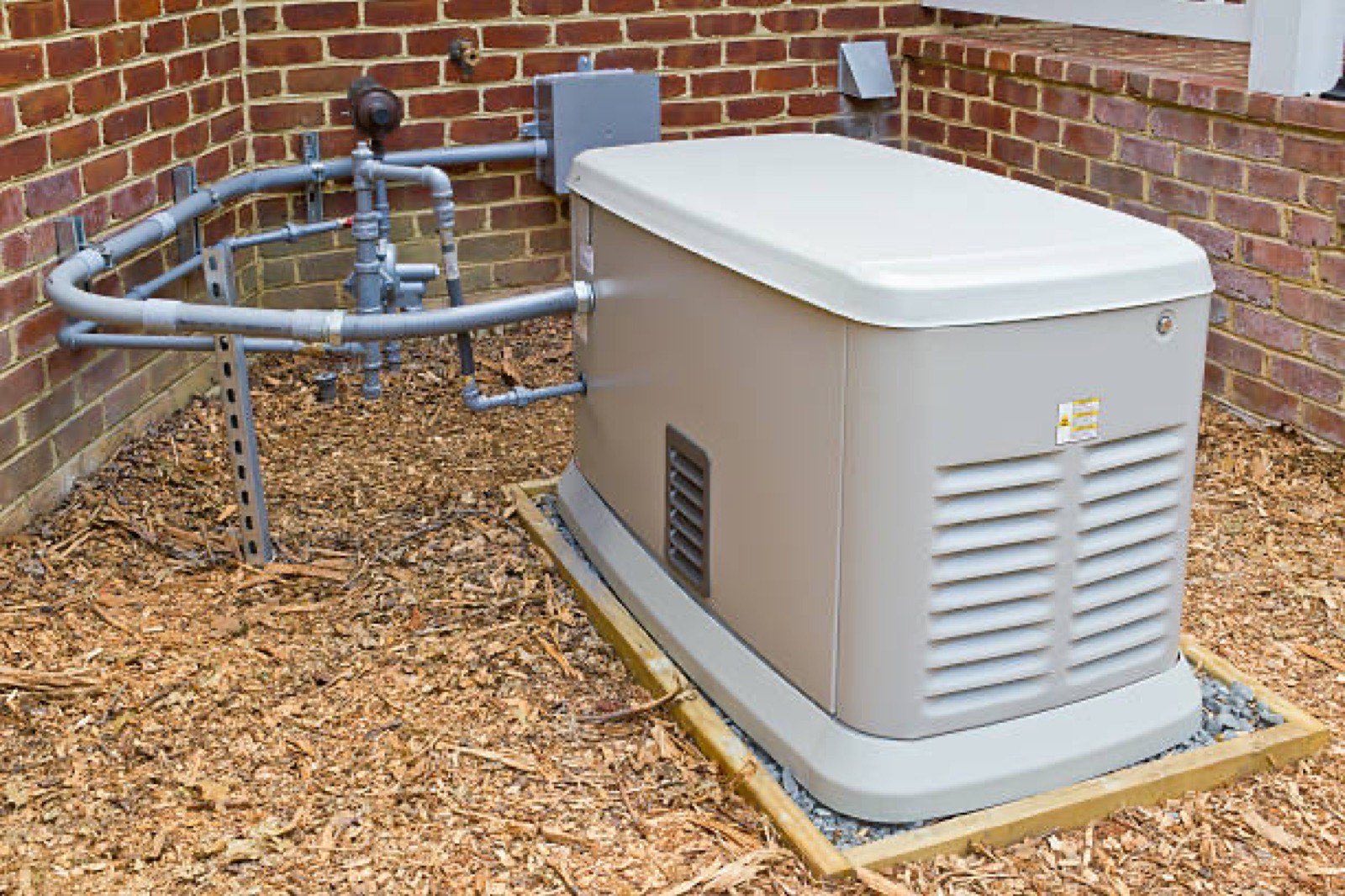
Whole House Generators · San Francisco
What A Whole House Install Actually Covers
A whole house generator is a permanently mounted unit sitting on a pad outside the building, plumbed into the natural gas line, wired to an automatic transfer switch beside your panel, and left alone until it is needed. When utility power drops, the transfer switch senses it, the engine starts, and the house is back up in about ten seconds without anybody being home. When PG&E comes back, it transfers again and shuts down. A properly sized unit carries the entire service — heat, refrigeration, lights, the well or sump pump, the internet, the medical equipment, the whole panel — rather than a handful of circuits you chose in advance and will regret choosing. We install air-cooled sets from 14kW to 26kW on almost every San Francisco house and liquid-cooled sets from 30kW to 60kW where the service is larger, the lot is bigger or the load genuinely justifies it. The alternative, when the panel or the budget will not support a full-house install, is a critical-loads backup generator covering the circuits that matter, which is an honest solution rather than a consolation prize.
Why Go With Us For A Standby Install
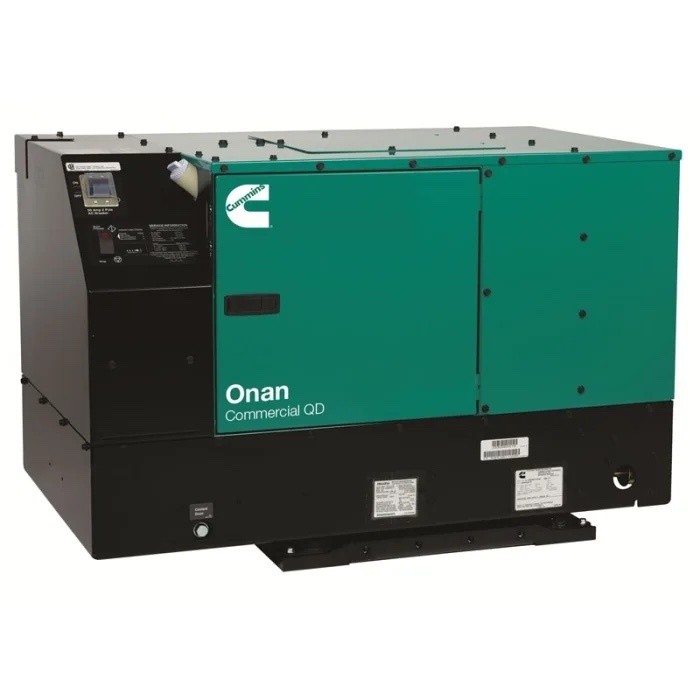
Half of what makes a standby install good or bad is decided before anybody picks up a tool. The unit has to be sized off a real load calculation rather than the square footage of the house. The pad has to sit at a legal distance from openable windows, doors and the property line, somewhere the exhaust is not aimed at a neighbor’s bedroom. The gas line has to be sized for the load at the pressure your meter actually delivers, which in older San Francisco housing stock is frequently not what the plan assumed. And the transfer switch has to go in cleanly, which sometimes means dealing with a panel that has been added to for forty years. We are a licensed C-10 electrical contractor and we do the gas, the electrical, the concrete and the permit as one job under one number, rather than handing you a generator and a list of other trades to hire. If the honest answer is that your service needs upgrading first, you hear that at the estimate. Units we install get a full commissioning run and their first year of annual generator maintenance included.
- Licensed C-10 electrical contractor doing the gas, electrical, pad and permit as one scope under one price.
- Sizing from a measured load calculation on your panel, not a rule of thumb based on floor area.
- Generac, Kohler, Cummins and Champion units — we install and warranty all four rather than pushing one brand.
- Permits pulled with the city or county and the inspection met by the person who did the work.
- Automatic transfer switch installed and commissioned, with a full start, transfer and load test before we leave.
- First year of annual maintenance included, and a service plan after that so nobody has to remember.
Reasons To Install A Whole House Generator
The reasons people finally do it are consistent, and most of them are not about convenience:
Somebody in the house depends on powered equipment
Oxygen concentrators, CPAP machines, dialysis equipment, refrigerated medication and powered mobility all stop working when the panel goes dead. This is the reason we hear most often and the one where the sizing conversation is least negotiable: the equipment has to be on the generator, not on a list of things you will plug into an extension cord.
You are on a Public Safety Power Shutoff circuit
PG&E de-energizes elevated fire-risk circuits on hot, dry, windy days, and much of the Berkeley and Oakland hills sits on them. These are planned outages with a day or two of notice that can run through a weekend. A standby unit turns a PSPS event into something you read about rather than something you live through.
You work from home and cannot simply stop
A house with no internet, no lighting and no way to charge anything is not a workplace. For anyone whose income depends on being reachable, the arithmetic on a standby install stops being about comfort within about two lost days a year.
A freezer or a wine cellar represents real money
A full chest freezer, a restaurant-grade refrigerator or a temperature-controlled cellar can lose more value in one long outage than a meaningful share of the install cost. It is an unglamorous reason and a completely rational one.
The house has a sump pump or a well
On the properties out toward the coast and in the low-lying parts of the Peninsula, losing a sump pump during the exact storm that took the power out is how a basement floods. If your water or your drainage depends on electricity, a generator is drainage equipment as much as it is electrical equipment.
You are selling within a few years
Standby generators are one of the few permanent additions Bay Area buyers actively look for, and appraisers generally treat a professionally installed, permitted unit as adding value rather than as a maintenance liability. An unpermitted one does the opposite, which is worth knowing before you take the cheap quote.
Tell us the address and roughly what is in the house, and we will tell you the size it genuinely needs rather than the size that is easiest to sell. Call: (415) 818-1837
How A Whole House Install Works
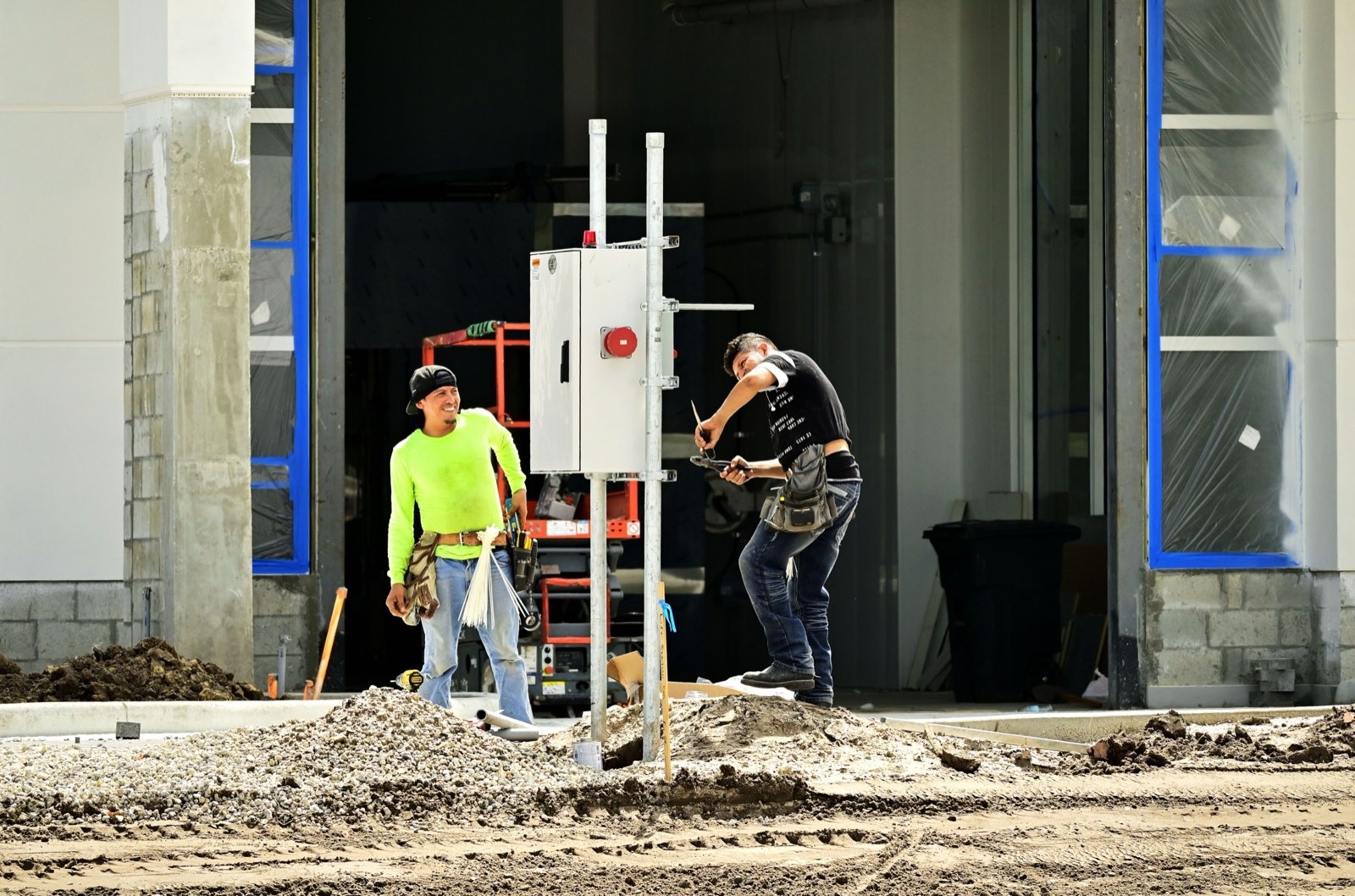
Four visits, three to six weeks, and one number quoted before anything starts.
1. Site visit and load calculation
We open the panel, measure the actual connected load, look at the gas meter and its pressure, and walk the possible pad locations checking setbacks from openings, the property line and anything the exhaust would point at. You get a written scope and a fixed price, and if a service upgrade is needed it is priced as a separate visible line rather than buried.
2. Permit and equipment
We pull the electrical and mechanical permits with the city or county and order the unit. Lead time on common air-cooled sizes is usually one to three weeks; larger liquid-cooled units and anything on backorder can be longer, and we tell you which one you are looking at before you commit.
3. Installation day
Pad or composite base set and leveled, unit placed, gas line run and pressure-tested, transfer switch installed at the panel, conductors pulled, battery in, everything terminated. Most air-cooled residential jobs are one long day; a service upgrade or an awkward gas run makes it two.
4. Commissioning and inspection
We start it, run it up, transfer the house onto it under real load, verify the exercise schedule, and walk you through the controller, the monitoring app and what the alarms mean. Then we meet the inspector and hand you the signed permit card. That card is the thing that matters at resale.
Sizing, Brands, Fuel And Transfer Switches
The decisions that make up a whole-house install, and how we generally come down on each:
Sizing: 14kW, 18kW, 22kW or 26kW
For a typical San Francisco house with gas heat, a gas range and no EV charger, 14kW to 18kW covers everything comfortably. All-electric houses, houses with heat pumps, houses with induction ranges and houses with a charger on the panel move up to 22kW or 26kW. Above that you are into liquid-cooled equipment, which is a different price class and worth being certain about.
Generac, Kohler, Cummins and Champion
We install all four. Generac has the deepest dealer and parts network in Northern California and is the default for a reason. Kohler generators run quieter at the same output and have a better reputation on long service life. Cummins generator installation makes most sense where a property already runs Cummins equipment or the load pushes into liquid-cooled sizes. Champion generators are the value option and genuinely fine for a modest house. Anyone who tells you only one of those brands is acceptable is telling you what they stock.
Natural gas, propane or diesel at a house
In San Francisco, natural gas wins nearly every time: the mains are everywhere, there is nothing to store, nothing to go stale and no delivery to schedule, and runtime is effectively unlimited. Propane is the answer only where gas service is genuinely absent, and it means a tank on the property and a refill relationship. Diesel generators belong on commercial and industrial sites, not behind a house — the fuel storage, the noise and the emissions permitting all point the same way.
What an automatic transfer switch does
The ATS is the part that makes it a standby system rather than a portable unit. It watches utility voltage, and when it drops it disconnects the house from the grid, signals the generator to start, and connects the house to it — typically within ten seconds. The grid disconnect is not optional: it is what stops your generator backfeeding the line and injuring somebody working on it. When utility power returns and stays stable, it transfers back and runs the engine down on a cooldown cycle.
Whole panel or a critical-loads subpanel
A whole-panel transfer switch backs up everything. A critical-loads switch backs up a chosen subpanel — heat, fridge, some lights, the router, one bathroom — and costs less both in switchgear and in the size of unit required. Where a panel is tight or a budget is real, the subpanel version is the sensible engineering answer, and it is what our backup generator installs generally look like.
Noise, placement and the neighbors
A modern air-cooled standby unit runs at roughly 60 to 70 decibels at seven metres, which is somewhere between a conversation and a window air conditioner, and the weekly exercise cycle is around twelve minutes. On a dense San Francisco block the placement decision is mostly about where the exhaust points and how far it is from the nearest openable window, and it is worth ten minutes of thought before the pad goes in.
What it costs to keep
A standby unit needs an oil and filter change, a plug and air filter check, a battery test and a load test once a year, and a run every week for a few minutes to keep it healthy. That is a couple of hundred dollars a year on a service plan. Skipping it is the single most common reason a generator fails on the one night it was bought for — see generator repair and maintenance for what a service visit covers.
What A Whole House Generator Costs In San Francisco
Installed, permitted and commissioned, a whole-house install in this market generally lands between $5,000 and $15,000. The spread is real and it is driven by:
- Unit size. A 14kW air-cooled set is a fraction of the cost of a 26kW one, and liquid-cooled equipment above 30kW is a different price class again.
- The transfer switch. A critical-loads subpanel switch is cheaper than a whole-service switch, and a 200-amp service switch is more than a 100-amp one.
- The gas run. Ten feet from an accessible meter is straightforward. Sixty feet around a building, through a crawlspace, with an upsized line to hold pressure at load, is not.
- The electrical run and the panel. A clean modern panel a few feet from the pad is the cheap case. An old panel needing a service upgrade before the ATS can go in adds a visible, separately quoted line.
- The pad and the access. A composite base on level ground is quick. Formed concrete on a slope, or a unit that has to be carried up stairs in Sausalito, is a day of labor before the install starts.
- Permits and inspection. Every jurisdiction we work in charges for electrical and mechanical permits, and the fees differ meaningfully between the city and the Peninsula.
You get one fixed price covering equipment, pad, gas, electrical, transfer switch, permit and commissioning, with any service upgrade priced separately so you can see it. If a permanent install is more than the situation warrants, a generator rental or a smaller backup unit is usually the better spend, and you can see the whole range of what we do across generator installation and service in San Francisco in one place.
Frequently Asked Questions
What size whole house generator do I need?
It comes off a load calculation, not the square footage. A typical San Francisco house with gas heat and a gas range is comfortable on 14kW to 18kW. An all-electric house, or one with a heat pump, an induction range or an EV charger, is usually 22kW to 26kW. Above that the equipment goes liquid-cooled and the price class changes. We measure the actual connected load at your panel and tell you which band you are in before quoting anything.
How much does a whole house generator cost installed?
Between about $5,000 and $15,000 in this market, all in. The low end is a 14kW air-cooled unit with a critical-loads transfer switch, a short gas run and an easy pad. The high end is a 26kW unit with a 200-amp service transfer switch, a long upsized gas line and a service upgrade. Permits, commissioning and the first year of maintenance are inside our number rather than added afterward.
How long does installation take from order to running?
Three to six weeks in most cases. Equipment lead time on common air-cooled sizes is one to three weeks, the permit runs alongside that, and the install itself is one long day for a straightforward job or two if a service upgrade or an awkward gas run is involved. Inspection follows within a week or two depending on the jurisdiction.
Do I need a permit to install a generator in San Francisco?
Yes. A standby install needs an electrical permit and a mechanical or plumbing permit for the gas connection, and the work is inspected. Every jurisdiction we cover requires it, and several also check placement against setback and noise rules. We pull the permits, meet the inspector and hand you the signed card, because an unpermitted generator becomes an expensive problem at resale.
What is an automatic transfer switch and do I have to have one?
It is the device that isolates your house from the utility and connects it to the generator. It senses the outage, starts the engine, transfers the load in about ten seconds, and reverses all of that when the grid comes back. Yes, you need one — a permanently installed generator without a listed transfer switch can backfeed the utility line and injure a lineman, which is why no inspector will pass it.
Where can the generator be placed on my property?
On level ground outside, away from openable windows, doors and vents, clear of the property line, with manufacturer clearance on all sides for airflow and service access. The typical requirement is five feet from openings and eighteen inches from the wall, but the binding numbers come from the manufacturer listing and the local code, and on tight city lots that combination frequently rules out the obvious spot. We check it on the estimate visit rather than on install day.
How loud is a whole house generator?
Around 60 to 70 decibels measured at seven metres for a modern air-cooled unit, which sits between normal conversation and a window air conditioner. Kohler and the enclosed liquid-cooled sets are at the quieter end. The weekly exercise cycle runs about twelve minutes and can be scheduled for a civilised hour, which on a dense block matters more than the raw number does.
Does a generator increase my home value?
Generally yes, and in outage-prone parts of the Bay Area it is one of the additions buyers actively search for. Industry surveys put the effect in the region of three to five percent of home value, and appraisers treat a permitted, professionally installed unit as a permanent improvement. The word doing the work in that sentence is permitted — an unpermitted install shows up as a liability during escrow instead.
Can I finance a generator installation?
Yes. Most customers use manufacturer-backed financing through the Generac and Kohler programs, a home improvement loan or a HELOC, and for a typical whole-house install the monthly figure lands in the same range as a phone bill. We are happy to break the quote into equipment, electrical and permit lines so a lender can see exactly what is being financed.
Need a generator in San Francisco?
Tell us the address and what has to stay running, and we will come back the same day with a free estimate and one fixed price.
Or call us now: (415) 818-1837